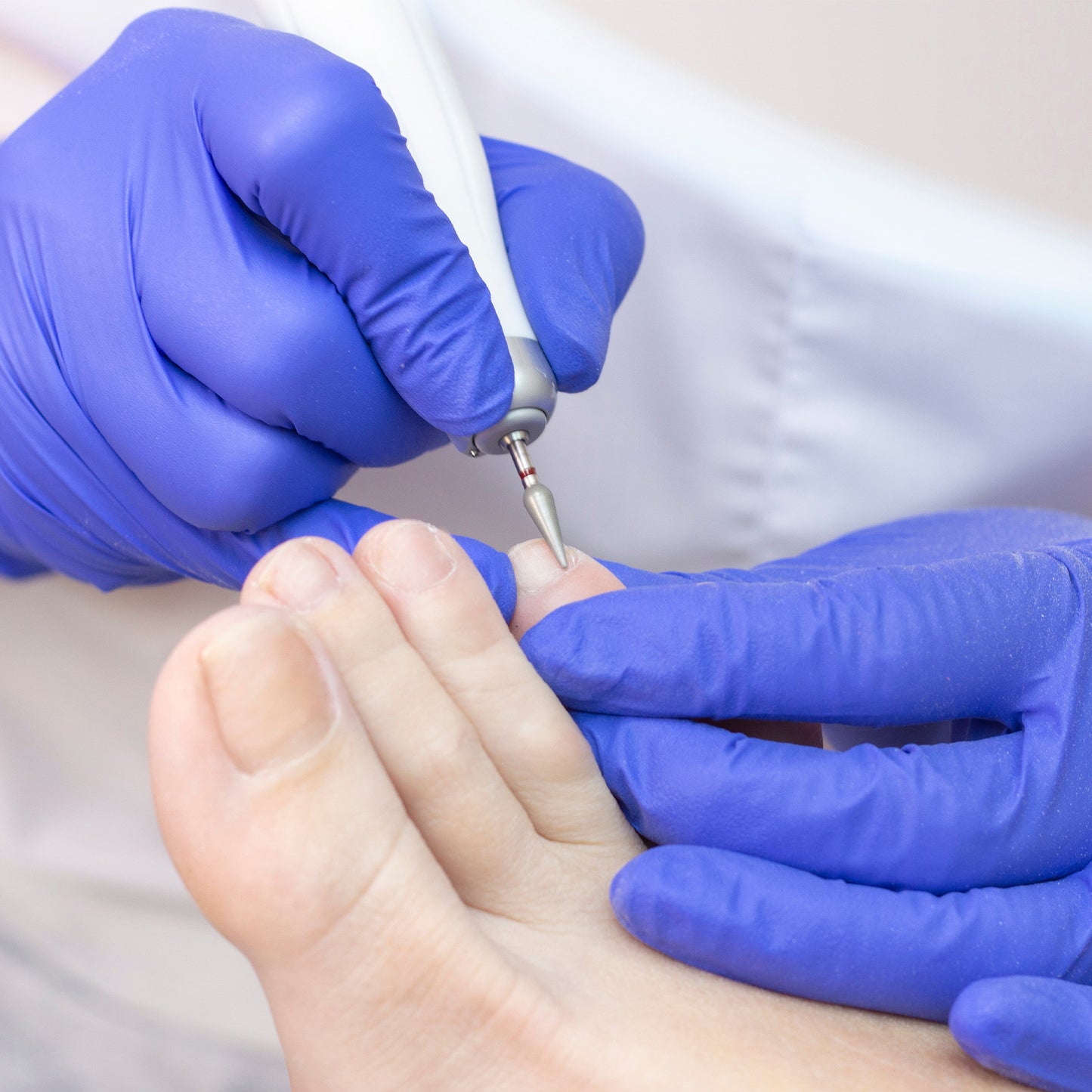
Dry Feet & Callus Treatment | Medical Pedicure Amsterdam Oost
Dry feet, callus under the foot, or cracked heels are very common. You might notice rough skin, a tight feeling, or small fissures in your heels. Many people think, “I’ll just use a good cream and it will improve.”
But that is not always enough. Sometimes dry skin and callus are signs that your feet need more than basic home care.
In this article you will learn:
- why dry feet and callus develop
- when it is still harmless
- when professional treatment is advisable
- what you can do at home
- and when it is wise to book an appointment
Why Do Dry Feet and Callus Develop?
Callus is a natural protective response. When your skin experiences repeated pressure or friction — for example under the ball of the foot or at the heels — it produces extra layers of hard skin.
It becomes problematic when:
- pressure is uneven
- you stand or walk for long periods
- footwear provides insufficient support
- the skin becomes very dry
- callus continues to build up
As the skin loses elasticity, cracks can develop, especially at the heels.
Many people search online for “dry feet,” “thick callus under foot,” or “painful heels.” Often they find creams or home remedies. However, the underlying cause is usually more than just dryness.
When Is Callus Still Normal?
Not all callus is harmful. In many cases, it simply acts as protection.
Callus is generally harmless when:
- it is not painful
- the skin remains intact
- no deep cracks are present
- it does not quickly return after removal
With regular maintenance and proper care, the skin can remain balanced.
When Should Dry Feet or Callus Be Treated?
It is advisable to seek professional care if you experience:
- pain when walking or standing
- a burning or pressure sensation
- cracks or fissures in the heels
- rapidly recurring callus
- no lasting improvement despite home treatment
Many people attempt to remove callus themselves. However, aggressive filing or cutting can actually stimulate the skin to produce more callus.
Professional treatment focuses not only on removing excess callus safely, but also on addressing the underlying cause.
Why Self-Treatment Is Not Always Enough
Search terms such as “remove callus” are very common. It seems simple: file it down and apply cream.
But common mistakes include:
- filing too deeply
- cutting or picking the skin
- relying only on moisturising without reducing pressure
This can lead to skin damage, fissures, or faster recurrence of callus.
A professional treatment is performed in a controlled and hygienic manner, with attention to skin condition and pressure distribution.
Treatment of Dry Feet and Callus in Amsterdam Oost
In my practice on Zeeburgereiland in the Sportheldenbuurt (Amsterdam Oost), I regularly treat clients with:
- painful heels
- persistent callus
- recurring cracks
- extremely dry skin
During a treatment:
- excess callus is removed safely
- the skin is assessed for risk factors
- pressure points are identified
- personalised advice is provided for home care
Addressing the issue early helps prevent small skin problems from becoming more serious.
What Can You Do at Home?
Good daily care helps maintain healthy skin and slow down callus formation.
Important steps include:
- applying moisturiser daily for dry skin
- using gentle products
- avoiding aggressive rasps
- scheduling professional maintenance when needed
In my practice, I work with professional foot care products that are fragrance-free, absorb quickly and leave no greasy residue. Depending on your skin type, a urea-based cream can help maintain hydration, support the skin barrier and slow down callus formation.
The right product depends on your individual skin condition and is discussed during your appointment.
When Is It Time to Book an Appointment?
If dry skin or callus keeps returning, becomes painful, or if you are unsure whether it is still harmless, it is wise to have your feet professionally assessed.
You are welcome in my practice in Amsterdam Oost (Zeeburgereiland) for both medical and preventive foot care.
Book your appointment online and keep your feet healthy and comfortable.
Frequently Asked Questions
Is callus bad for your feet?
Not necessarily. Callus is protective, but excessive buildup can cause pain and cracks.
How often should callus be removed?
This depends on your skin type, lifestyle and pressure distribution.
Does cream remove callus?
Cream helps keep the skin supple, but it does not remove thick callus.
What helps with cracked heels?
Early dryness may respond to moisturising. Deep fissures are best treated professionally.