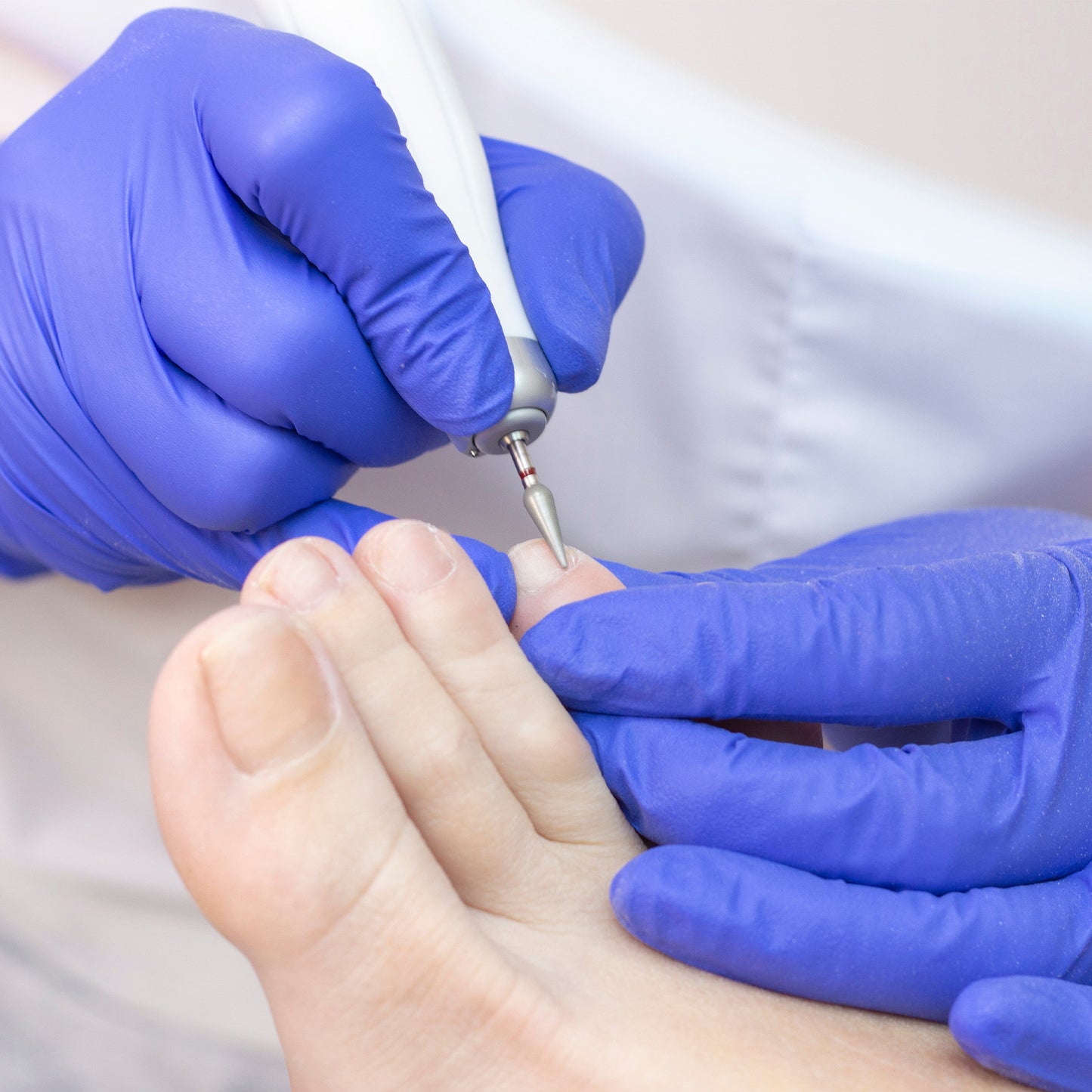
What Is a Medical Pedicure? The Difference Between a Regular Pedicure and a Nail Salon Explained
If you are searching for a pedicure in Amsterdam Oost, you may come across different terms such as basic pedicure, medical pedicure, or cosmetic pedicure. It is completely understandable to wonder what the difference is.
Not every pedicure has the same training or qualifications. Especially if you have foot complaints — or simply want professional reassurance about the health of your feet — the difference can matter.
The Title “Pedicure” Is Not Protected
In the Netherlands, the title “pedicure” is not legally protected. In principle, anyone can call themselves a pedicure, even without completing an officially recognised training programme.
If you want to be sure that you are visiting a professionally trained specialist, it is important to look at:
- recognised vocational training
- membership of a professional association
- registration in a quality register
The national professional association for pedicures in the Netherlands is ProVoet. Only pedicures who have completed an officially recognised training programme can become members.
So if a pedicure is affiliated with ProVoet, you know that they have followed accredited training and work according to professional standards.
In addition to initial training, ongoing professional development plays an essential role in maintaining high-quality care.
What Does a Certified Basic Pedicure Do?
A certified basic pedicure has completed an officially recognised vocational programme and may provide regular foot care such as:
- trimming and shaping nails
- removing callus
- treating corns
- general preventive foot care
This is sufficient when there are no medical risks or complex foot conditions.
However, a basic pedicure does not treat high-risk feet. Conditions such as diabetes, rheumatism, reduced circulation, or neuropathy require additional specialised training.
What Makes a Medical Pedicure Different?
A medical pedicure has completed advanced training on top of the basic qualification. This allows them to treat high-risk feet and more complex nail and skin conditions.
In addition to standard care, a medical pedicure can apply specialised techniques such as:
- nail reconstruction
- nail brace techniques for ingrown toenails
- silicone orthoses for pressure relief
- felt padding techniques
- treatment of thickened or damaged nails
The focus is not only on resolving current complaints, but also on preventing further complications.
Registration, Quality Register and AGB Code – What Does It Mean?
As a medical pedicure, I am affiliated with ProVoet and registered in the Kwaliteitsregister Pedicures (Quality Register for Pedicures).
This means that I:
- complete mandatory continuing education each year
- earn accreditation points
- keep my professional knowledge up to date
- work according to established quality and hygiene guidelines
My registration is linked to a KRP registration number and an AGB code. These remain valid only when all continuing education requirements are met.
For you as a client, this means you can rely on up-to-date knowledge and professionally delivered care.
Collaboration with Podiatrists
For clients with high-risk feet, I work in collaboration with podiatrists. They assess the risk of wound formation and complications and determine an appropriate care profile.
Based on this assessment, periodic medical foot care can be provided with a strong focus on prevention. This collaboration is especially important for clients with diabetes or reduced sensitivity, where small issues can develop into serious problems.
Hygiene Is Not a Detail – It Is Essential
In medical foot care, hygiene is fundamental. Especially when dealing with:
- high-risk feet
- cracks or wounds
- fungal nails
- ingrown toenails
careful and hygienic working methods are essential.
In my practice on Zeeburgereiland in the Sportheldenbuurt (Amsterdam Oost), I work according to professional hygiene protocols. This includes:
- properly cleaned and disinfected instruments
- working according to strict protocols
- maintaining a clean and organised treatment space
Many clients mention in their reviews that they appreciate how clean and professional the practice looks. That is understandable — safe care begins with a hygienic environment.
For me, hygiene is not an extra service, but a standard part of professional foot care.
What Is the Difference Compared to a Nail Salon or Spa Pedicure?
In a nail salon or spa, the focus is primarily on relaxation and cosmetic treatments such as polish or gel polish.
This is perfectly fine if you do not have medical complaints.
However, if you are experiencing:
- painful heels
- persistent callus
- ingrown toenails
- fungal nails
- pressure-related discomfort
specialised knowledge is more important than purely cosmetic results.
You Are Also Welcome Without Complaints
You do not need to have a high-risk foot to book an appointment.
You are also welcome for:
- nail trimming
- callus maintenance
- preventive check-ups
- general foot care
Regular professional foot care helps prevent future problems.
Medical Pedicure in Amsterdam Oost (Zeeburgereiland)
My practice is located on Zeeburgereiland in the Sportheldenbuurt, Amsterdam Oost. You are welcome for both medical and preventive foot care.
Not sure which treatment is right for you? I am happy to advise.
👉 Book your appointment online and have your feet professionally assessed.